Significant Projects
The Department of Finance — Government Services Branch
The Department of Finance is a central agency, operating at the core of Australian Government decision‑making and service delivery. Within Finance, the Government Services Branch (GSB) is responsible for the design, delivery and operation of whole‑of‑government (WofG) digital platforms that enable secure collaboration, information sharing and service delivery across agencies.

Embedded within a central capability and resource team, I was substantively engaged at the APS6 level, while frequently delivering work at an EL1 standard, which led to acting EL1 opportunities. In this capacity, I provided UX, accessibility and strategic design leadership across multiple high‑profile services, often operating in complex and ambiguous problem spaces where design maturity, accessibility practice and user‑centred ways of working were still emerging.
I led and influenced multidisciplinary teams across product, engineering, delivery, policy and executive stakeholders by translating complex business, policy and technical requirements into clear, scalable and accessible user experiences. This included shaping service direction, guiding design standards, and embedding user‑centred and accessibility‑first practices across whole‑of‑government platforms.
Operating in a high‑visibility environment, I uplifted capability and led through ambiguity, influencing without formal authority while balancing hands‑on delivery with long‑term service and platform strategy. This involved mentoring peers, coaching stakeholders in design and accessibility, and establishing Figma standards and workflows that improved consistency, collaboration and delivery outcomes across multiple services.
Parliamentary Document Management System
PDMS is a mission‑critical, centralised and secure platform that supports the creation, management and preservation of ministerial, parliamentary and cabinet‑related records across government. It is used by more than 90 Commonwealth entities, supporting approximately 45,000 weekly active users and the creation of over 400,000 official records each year.
PDMS enables agencies to work consistently, respond faster, and meet governance and records‑management obligations at scale across both agencies and ministerial offices.
On this program, I was the sole UX/UI Designer for the PDMS UI Uplift, leading user research, co‑design activities and targeted UI enhancements to improve usability and support effective adoption across a complex, high‑stakes user base.
PDMS UI UPLIFT: DASHBOARD
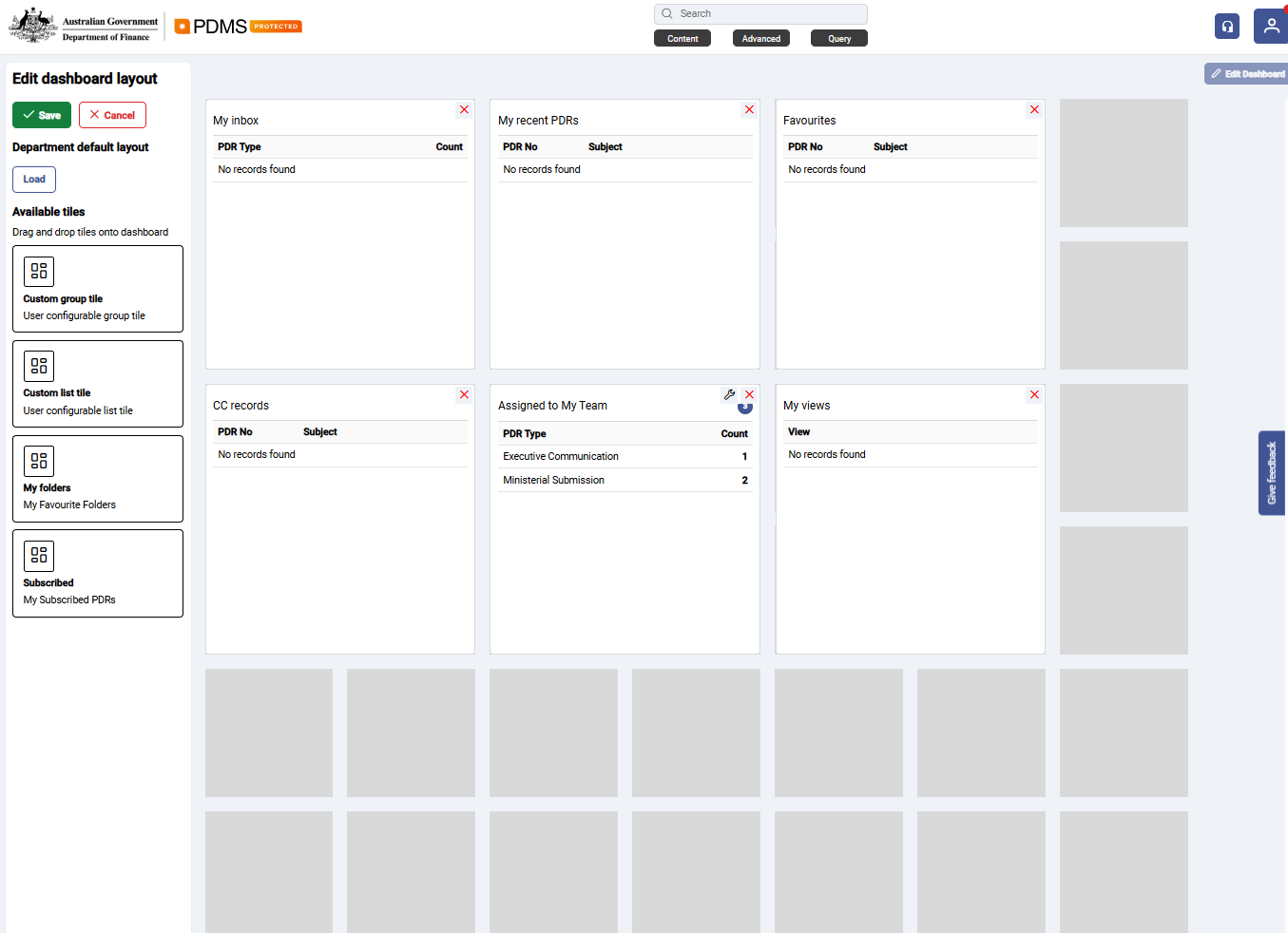
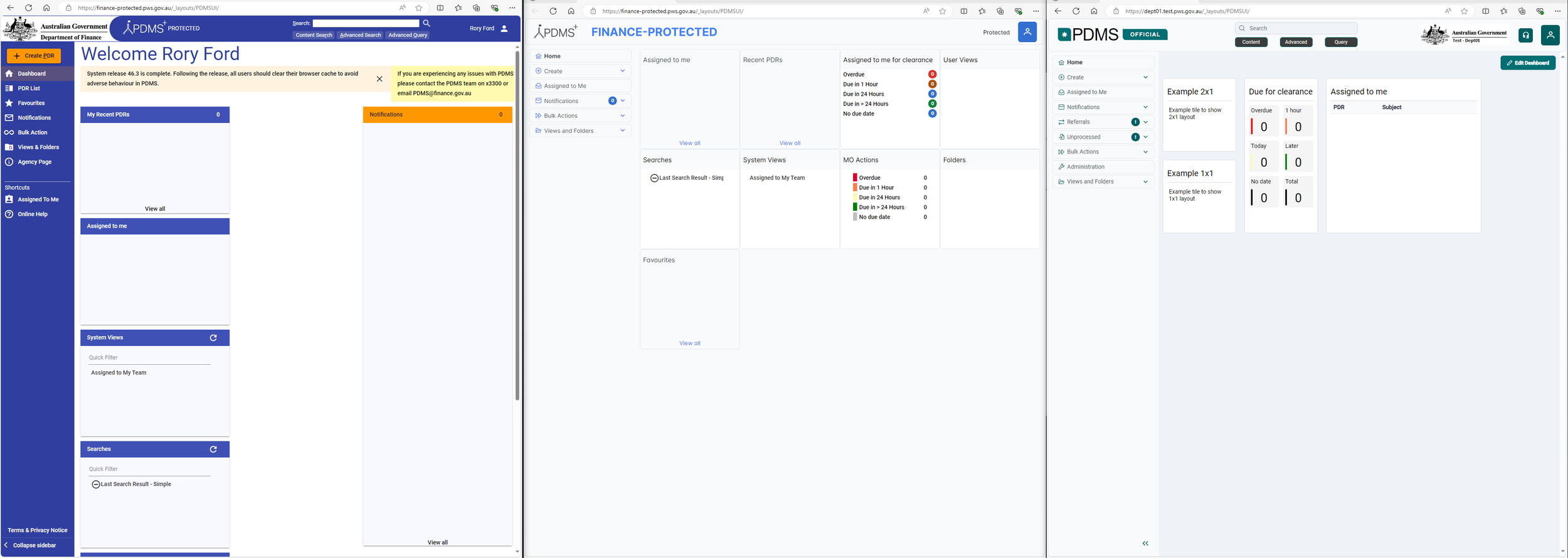
Led the design of a new PDMS dashboard to modernise the platform’s entry point and reduce cognitive load for users navigating complex parliamentary workflows. I produced iterative dashboard prototypes in Figma, exploring layout, visual hierarchy, terminology and interaction patterns, including a configurable tile‑based model and an explicit “edit dashboard” mode to support flexibility without introducing clutter.
Working in an agile delivery environment, I collaborated closely with developers and testers to ensure designs were buildable and testable, using prototypes to support backlog refinement, clarify acceptance criteria, and surface technical constraints early. Design decisions were informed through ongoing feedback sessions, prototype walkthroughs, and terminology testing, helping align user needs with delivery realities.
The outcome was a validated dashboard direction that balanced modern UI patterns with the constraints of a mission‑critical government system, providing a clear foundation for development, testing, and future iteration.
For an in-depth look you can access the Figma file here.
PDMS UI UPLIFT: DOCUMENT EXPERIENCE
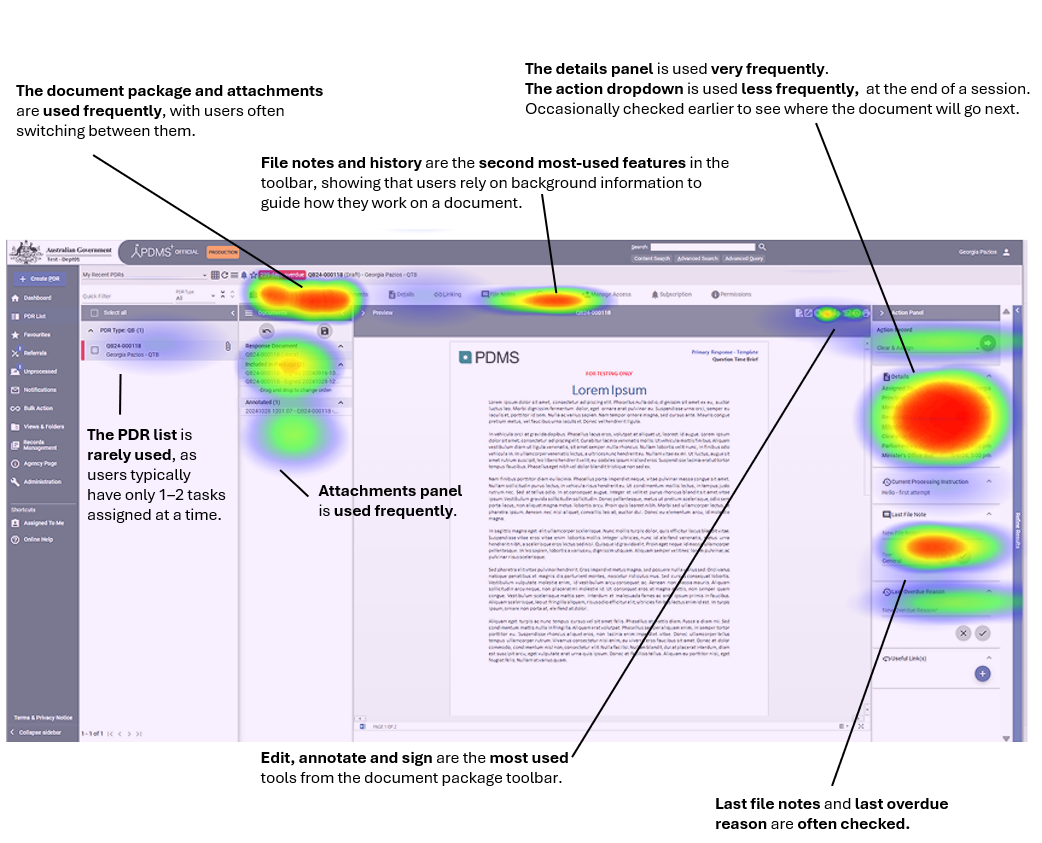
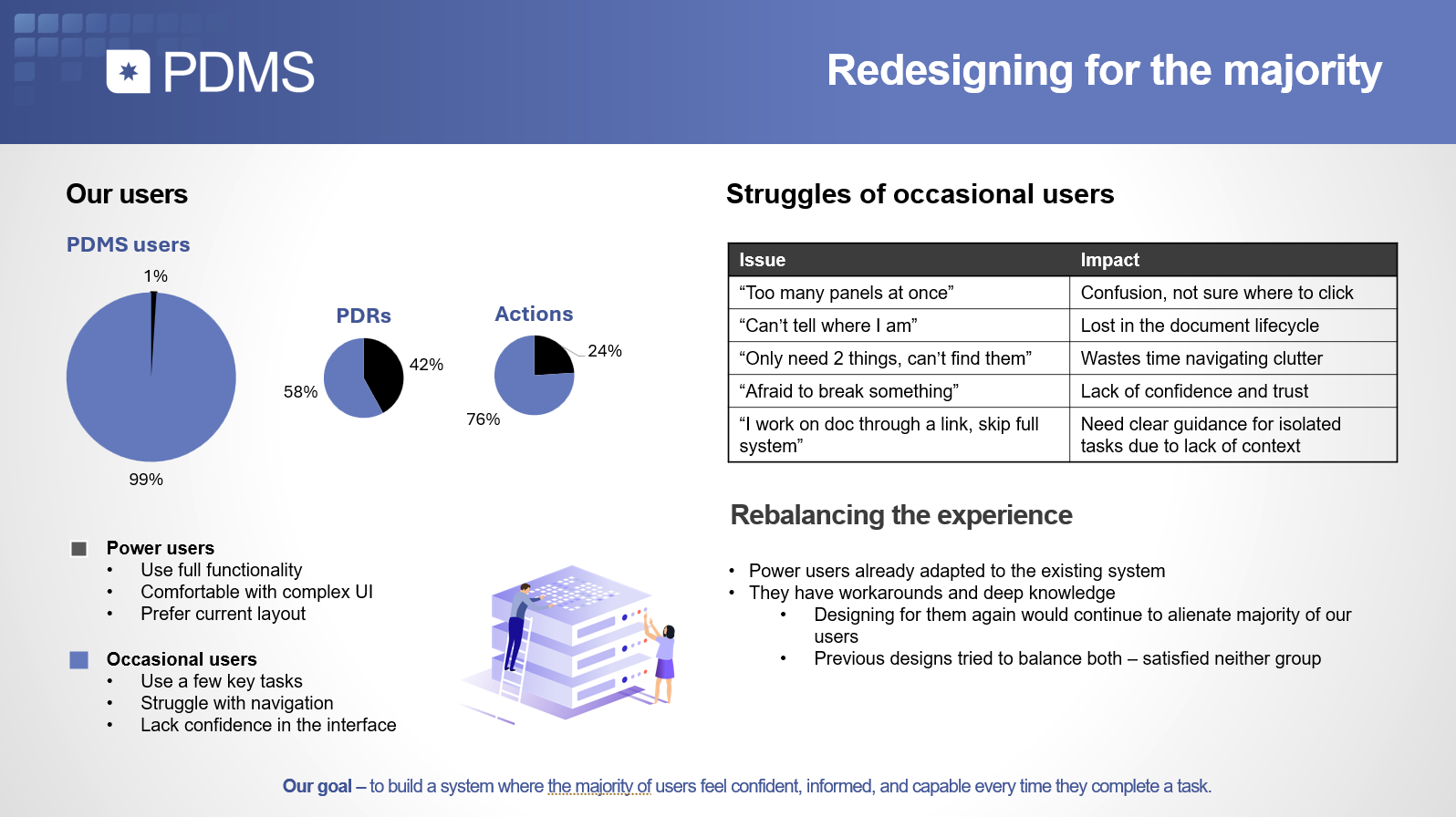
Led a multi‑phase user research initiative to modernise the PDMS document experience, grounding design decisions in real user behaviour across government. I designed and delivered end‑to‑end research artefacts including a research strategy, recruitment and communications plan, session scripts, and a discovery playbook, enabling safe, scalable engagement with users beyond the core stakeholder group.
The discovery phase combined 1:1 research sessions, interface heat‑mapping, journey walkthroughs and concept testing to understand how users navigate complex document workflows, manage multi‑panel layouts, and interpret system status and actions. Insights were synthesised into clear problem statements and design principles, informing the creation and testing of multiple UI concepts.
Working closely with product and delivery teams, I facilitated co‑creation sessions where user feedback directly shaped a new document interface concept, focused on simplifying layout, streamlining the toolbar, and reducing cognitive load while maintaining compliance requirements. The outcome was a validated design direction and a clear evidence base to support progression into Alpha, accessibility design (dark and high‑contrast modes), and future iterative testing.
The product in phase Alpha can be found here.
Password: PDMS
PDMS UI UPLIFT: ACTIVITY CENTRE
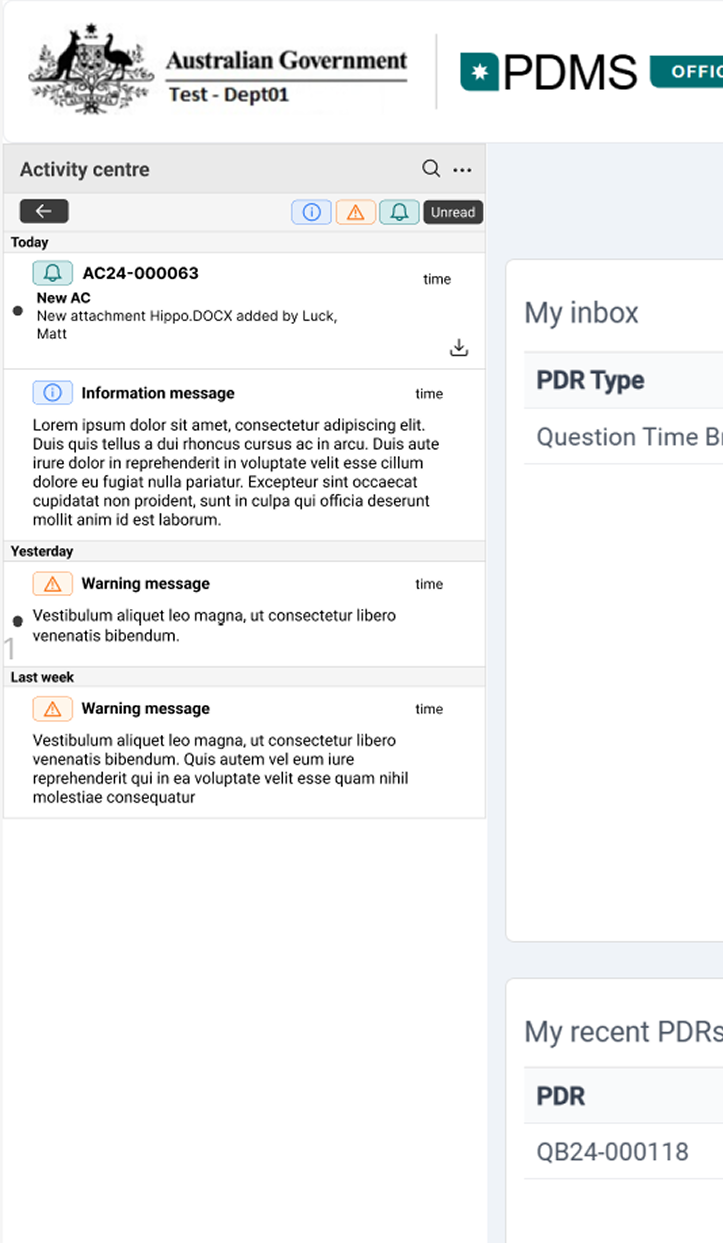
Led concept ideation to define a modern “Activity Centre” experience, reframing system actions and updates into a clearer, task‑focused model that reduces clutter and makes progress/status easier to understand.
The work focused on simplifying how users find what needs attention and aligning the experience with contemporary UI patterns while remaining fit‑for‑purpose for a government platform.
GovPlace
GovPlace is a secure, PROTECTED digital environment enabling agencies without modern collaboration platforms to work securely using tools such as Microsoft Teams, Outlook, and SharePoint, alongside access to PDMS and CabNet+. I was the lead UX for the creation and ideation of GovPlace, translating complex needs into a real, operational service—from early concept through to delivery. The service currently supports 400+ users across 3 agencies, with planned growth to 3,000+ users across 40+ agencies.
GOVPLACE IDEATION: DASHBOARD
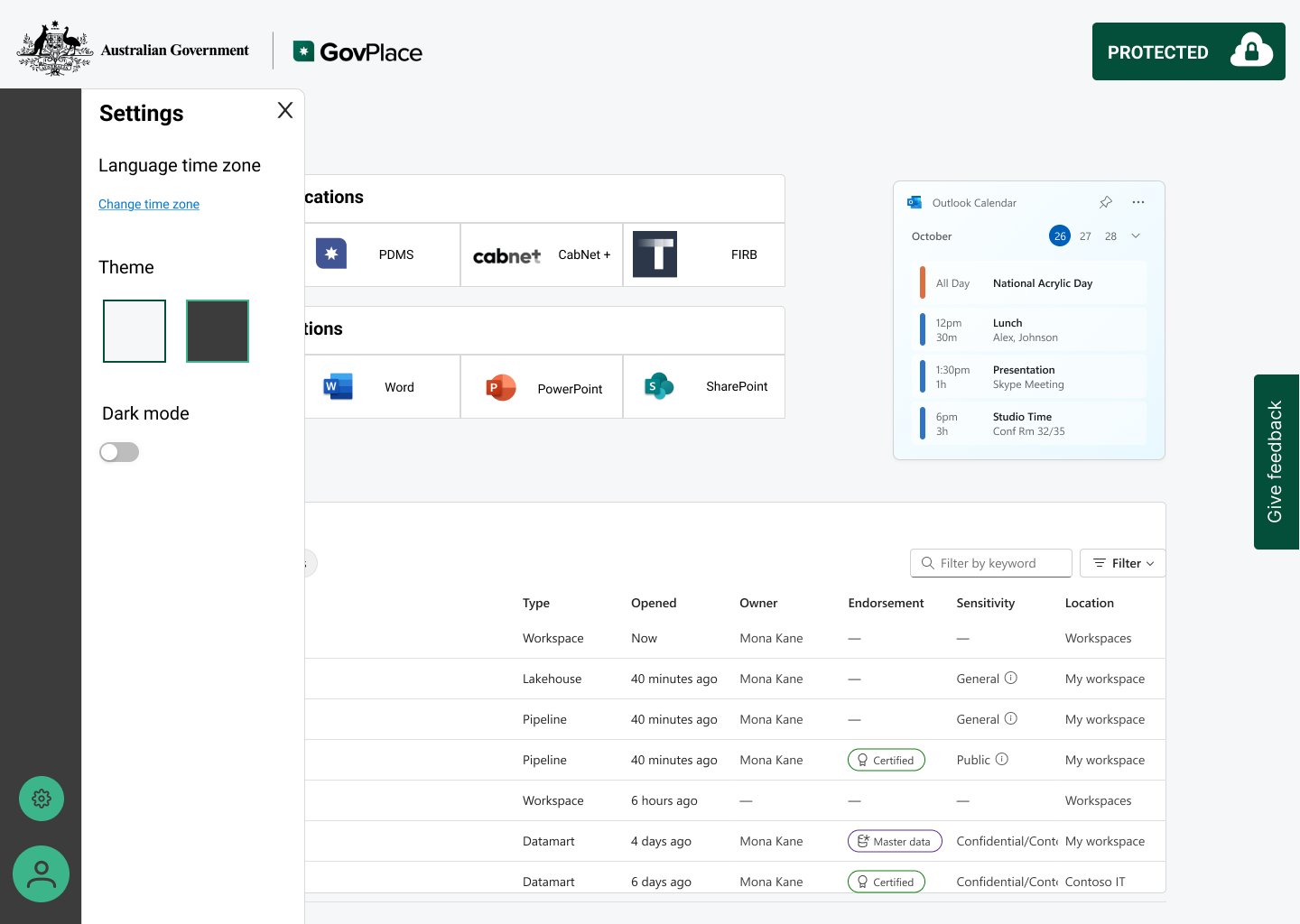
Through co design and blue sky ideation sessions with executives and technical stakeholders, I helped translate an early concept of a protected enclave into a tangible product vision. By facilitating discussions, extracting key ideas, and aligning diverse perspectives, I developed a visual front end for the platform that defined how users would access and interact with the system.
I designed a high fidelity GovPlace dashboard prototype in Figma to socialise the intended user experience and support early build planning. The prototype mapped core modules including navigation, Microsoft application entry points, recent documents, calendar, profile and settings, and feedback, while also exploring the sign in and identity experience as a key UX decision point to enable targeted stakeholder feedback and development estimation.
The dashboard was designed with accessibility in mind, incorporating WCAG principles, clear visual hierarchy, and support for both light and dark modes.
GOVPLACE: BRANDING PACK
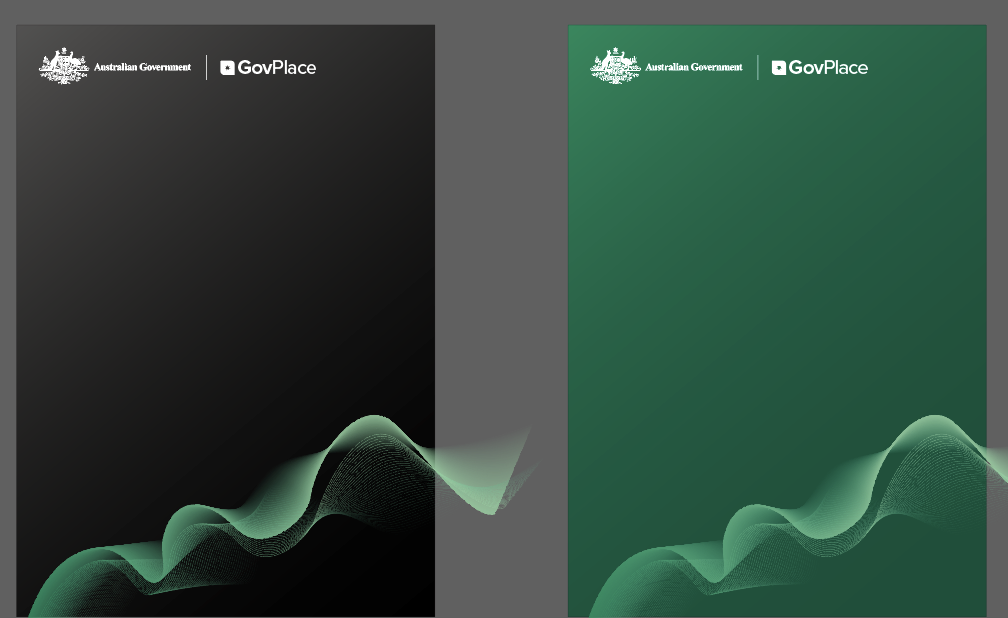
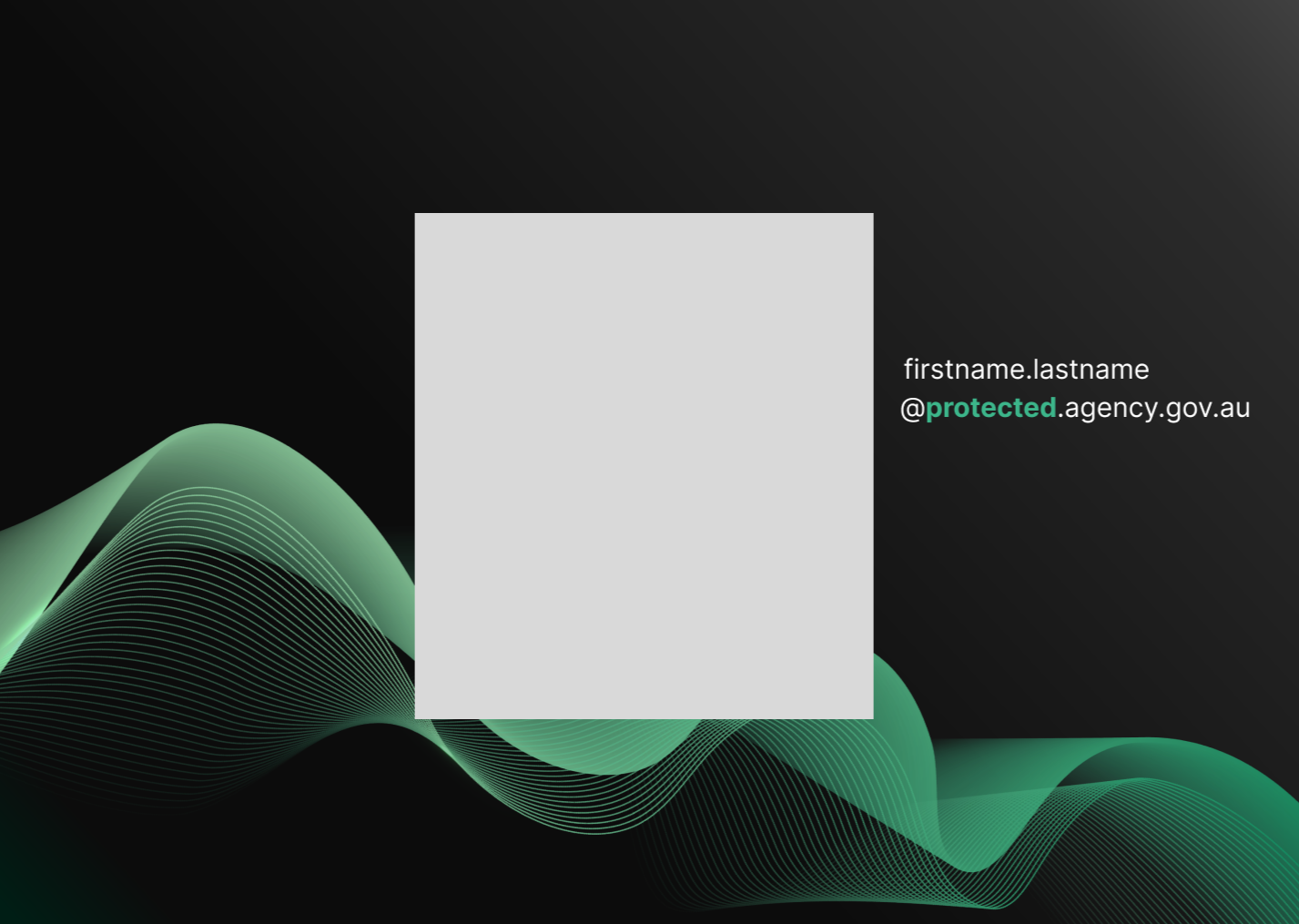
Created a cohesive GovPlace brand kit and reusable communication templates, including logo and application, colour/gradient assets built in Illustrator, and branded Word, PowerPoint and email formats for consistent rollout.
The pack aligned with agreed service branding conventions (GovPlace + Australian Government logo approach) and provided a scalable foundation for future comms and stakeholder‑facing materials.
Department of Treasury
My time at the Department of the Treasury laid the foundations for the UX/UI Designer I am today. Working across policy, system support, and digital delivery roles, I developed a strong understanding of how government systems, users, and stakeholders intersect.
I facilitated user research and testing for government websites, designed interface concepts using Figma, and contributed to the delivery of digital services aligned with the Digital Service Standard and WCAG accessibility guidelines. Collaborating closely with developers, policy teams, and stakeholders strengthened my ability to translate complex requirements into clear, user centred solutions.
This experience built my core UX skills in research, accessibility, and cross functional collaboration, and shaped my approach to designing effective digital services in government environments.
GOVERNMENT PROJECT: DTA’S DIGITAL SERVICE STANDARD 2.0
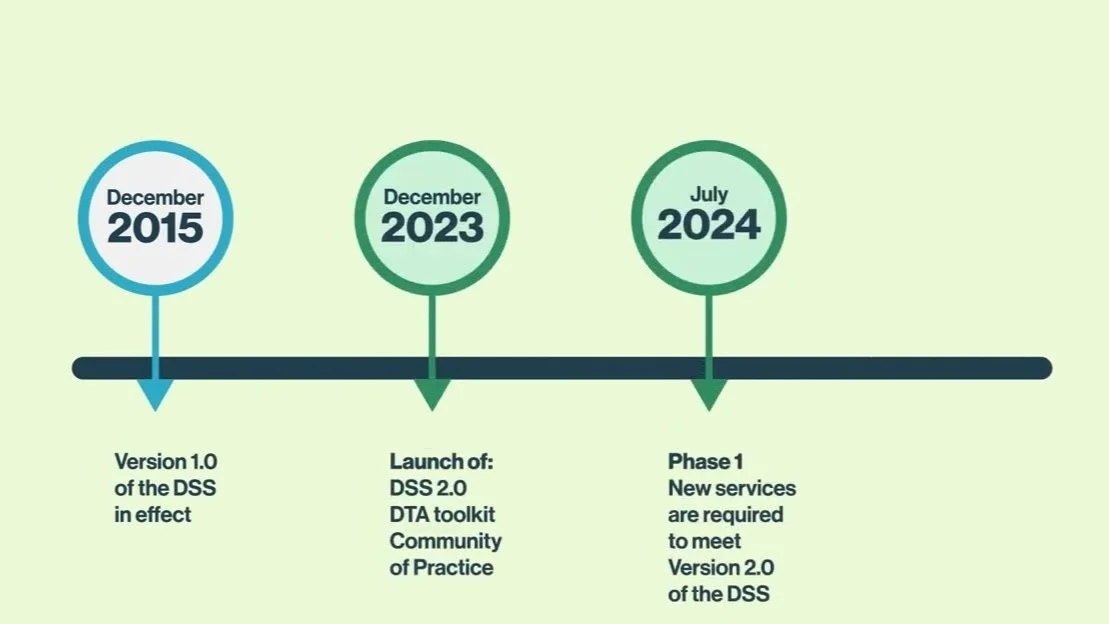
From January 2024, I worked to align Treasury services with the newly introduced Digital Service Standard 2.0. This includes adopting streamlined criteria, leveraging the new Digital Experience Toolkit, and focusing on trust, digital protection, and inclusion. My efforts ensure our services are accessible to all users, including those with disabilities, and comply with best practices.
Additionally, I extend these improvements to staff-facing services and engage in ongoing discussions to support continuous improvement and compliance with the DTA’s guidelines.
GOVERNMENT WEBSITE: CONSUMER LAW WEBSITE

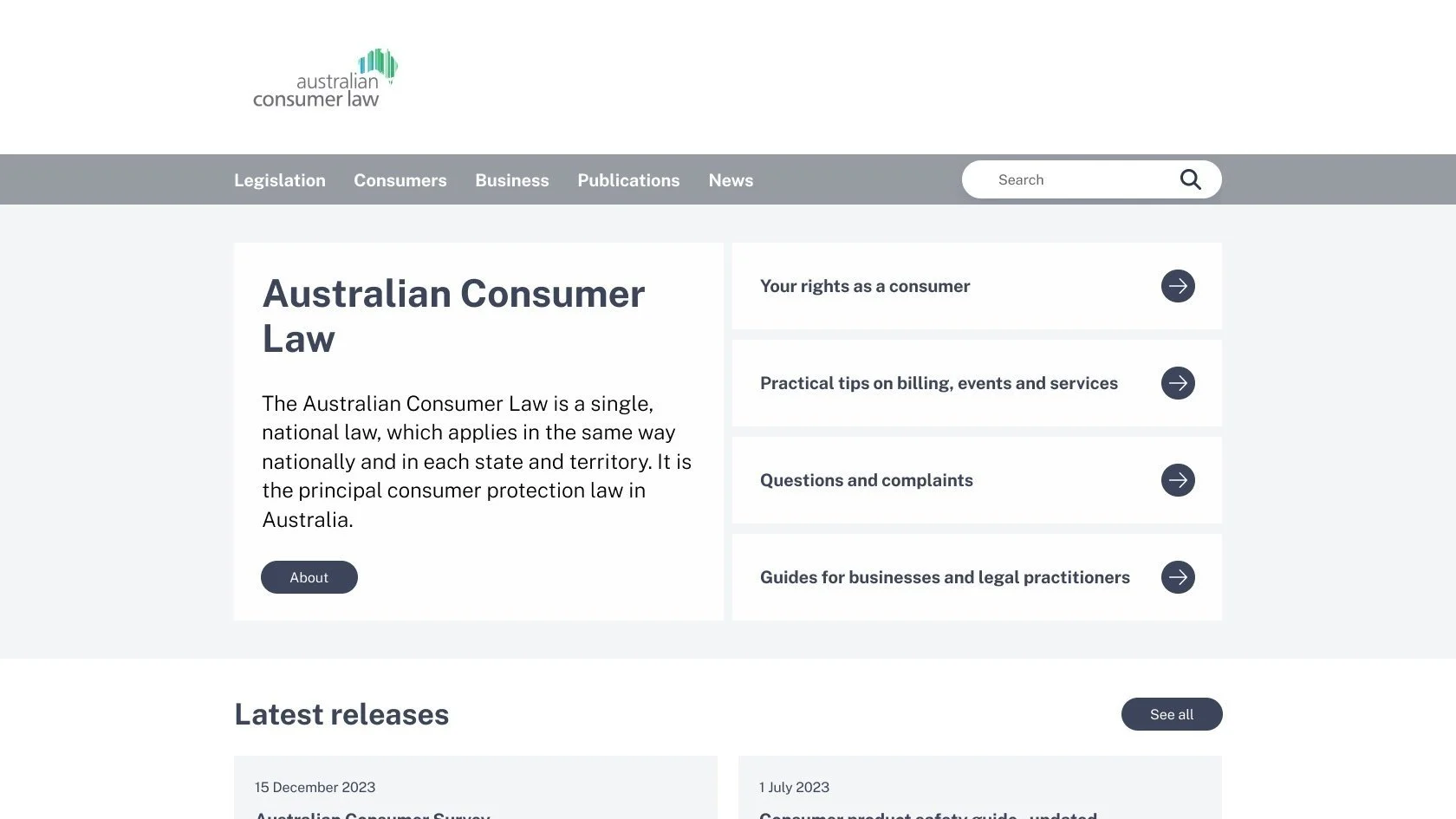
In response to the new Digital Service Standard, I began to lead the full redevelopment of the Consumer Law website in January 2024, which previously failed to meet most criteria.
During the discovery phase, I conducted a thorough analysis of website analytics and performed extensive user research to identify personas and map user journeys, ensuring a deep understanding of our users.
Now in the Alpha phase, the prototype is being rigorously tested. Results from this testing will be evaluated to guide further development in the Beta phase, ensuring a user-centric final product.
Preview here.
GOVERNMENT WEBSITE: TREASURY GRADUATES

I was instrumental in the rigorous user testing of the Treasury Graduate website. This involved creating the testing plan and communications and carefully selecting the right audience of users.
I conducted behavioral testing on our Beta prototype with recent graduates and departmental recruiters, leading the sessions and meticulously tracking results and observations.
Additionally, I extracted the data and created design artefacts to guide developers in making user-informed changes. As a result, the website now meets the criteria of the Digital Service Standard.
Preview here.

GOVERNMENT WEBSITE: PAYMENT TIMES REPORTING SCHEME
For the Payment Times Reporting Scheme (PTRS) at the Treasury, I applied my user-centred design skills to guide the launch of the new PTRS website. This marked a significant milestone in my professional journey.
While resource constraints limited direct user research, I leveraged data from high-performing regulatory websites, the Australian Government Style Manual, and internal Google analytics for Information Architecture improvements.
My role encompassed website creation, adherence to accessibility standards using HTML patterns and tags, and effective project management from initiation to completion and communication with internal teams and external stakeholders throughout.
Preview here.